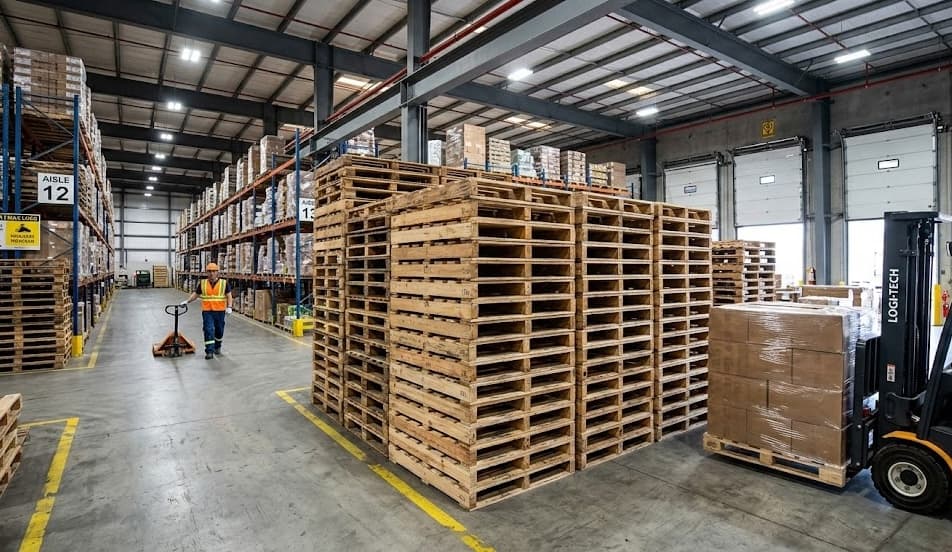
Zero waste is not just an aspiration — it is an achievable operational goal. And your pallet program is one of the biggest levers you have to get there.
What Zero Waste Actually Means
Zero waste does not mean producing no waste at all — it means diverting 90% or more of waste from landfill through reduction, reuse, recycling, and composting. For warehouse operations, the largest waste streams by volume are typically: packaging materials (stretch wrap, cardboard, banding), pallets and wood waste, and damaged products. Of these three, pallets are often the easiest to address because the infrastructure for pallet reuse and recycling already exists.
The Pallet Waste Problem
The EPA estimates that wood pallets account for approximately 12% of all wood waste in U.S. landfills. That is roughly 20 million pallets per year going to landfill despite being almost entirely recyclable or reusable. The disconnect is not technical — it is logistical. Many businesses simply do not have a convenient, cost-effective pathway to get used pallets out of their facility and into the reuse or recycling stream.
Building a Pallet Diversion Program
A pallet diversion program has three tiers. Tier 1 (Reuse): Pallets in good condition are sold back to suppliers through buyback programs. This generates revenue. Tier 2 (Repair): Pallets with minor damage are repaired on-site or sent to a repair facility. This is cost-neutral to slightly positive. Tier 3 (Recycling): Pallets beyond economical repair are sent to a recycler for chipping into mulch, biomass, or composite material. This may have a small cost but still diverts from landfill.
Measuring Your Diversion Rate
To calculate your pallet diversion rate, track: total pallets entering your facility per month, pallets reused (returned to your own supply chain), pallets sold through buyback, pallets sent to repair, pallets sent to recycling, and pallets sent to landfill or dumpster. Your diversion rate is (total minus landfill) divided by total, expressed as a percentage. Most warehouses start at 40-60% diversion and can reach 90%+ within 6-12 months of implementing a structured program.
Case Study: From 45% to 96% Diversion
One of our San Diego distribution center clients started with a 45% pallet diversion rate — most damaged pallets went into a dumpster because disposal was easier than figuring out alternatives. We implemented a three-part program: a scheduled buyback pickup for sellable pallets (replacing dumpster disposal), an on-site repair station for minor fixes (a half-day training for their team), and weekly recycling pickup for the remainder. Within 6 months, their diversion rate hit 96%, dumpster costs dropped by 60%, and pallet buyback revenue covered the remaining disposal costs.
Getting Started
The first step is a waste audit. Count your pallets for one month: how many come in, how many go out, and what happens to the rest. This baseline tells you where the opportunities are. From there, we can design a program that fits your operation's volume, space, and labor constraints. The goal is not perfection on day one — it is continuous improvement toward zero waste, and pallets are the best place to start.
Need help with your pallet program?
We've been working with pallets for over 12 years. We'll give you honest, practical advice — not a sales pitch. Email us at info@sandiegopallet.com or use the contact form below.
Contact Us