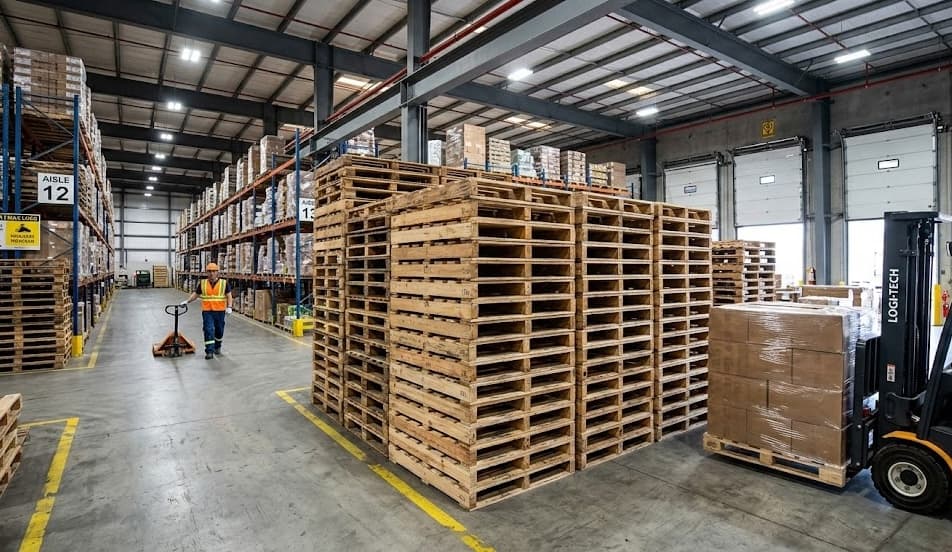
Not all wood is created equal when it comes to pallet construction. The species used in your pallets directly affects strength, weight, moisture resistance, and lifespan.
Why Species Matters
Wood species is one of the most overlooked factors in pallet performance. Two pallets of identical dimensions can have dramatically different load capacities, weights, and lifespans depending on the wood they are made from. Understanding the basic properties of common pallet woods helps you make better purchasing decisions and troubleshoot performance issues.
Southern Yellow Pine
Southern yellow pine (SYP) is the dominant species in new pallet manufacturing in the southeastern and south-central United States. It is a softwood with good strength-to-weight ratio, excellent nail-holding properties, and wide availability. SYP pallets are strong, relatively lightweight (35-45 lbs for a standard 48x40), and cost-effective. The downside: SYP is more susceptible to moisture damage and decay than hardwoods, making proper storage important.
Oak and Hardwood Mix
Oak and mixed hardwoods are common in pallets manufactured in the eastern United States. Hardwood pallets are heavier (50-70 lbs), significantly more durable, and more resistant to moisture damage. They tend to last longer in rough handling environments and can support higher loads. The trade-offs are weight (harder on manual handling and freight costs) and cost (hardwood lumber is more expensive). Hardwood pallets are common in the used market because their durability means they circulate longer.
SPF (Spruce-Pine-Fir)
SPF is a softwood group common in Canadian and northern U.S. pallet production. It is lighter than SYP, less expensive, and adequate for lighter-duty applications. SPF pallets are appropriate for floor-stacking operations, lightweight products, and one-way shipments. They are less suitable for racked storage of heavy loads or environments with high moisture exposure.
Recycled and Mixed Species
Used pallets often contain a mix of species, especially after board replacements during repair. A pallet that started as all-SYP might have one or two hardwood replacement boards. This is normal and generally does not affect performance for standard applications. However, for automated systems with strict weight tolerances, species-consistent pallets may be worth specifying.
Matching Species to Application
For most applications, species is secondary to grade and construction quality. But when performance is critical, consider the following guidelines. Heavy loads and racked storage: prefer hardwood or high-grade SYP. Export and ISPM 15 applications: any species can be heat-treated, but SYP is most commonly available. Lightweight and one-way: SPF or lower-grade SYP. Outdoor or high-moisture environments: hardwood for decay resistance. Tell us about your application and we will recommend the right material for the job.
Need help with your pallet program?
We've been working with pallets for over 12 years. We'll give you honest, practical advice — not a sales pitch. Email us at info@sandiegopallet.com or use the contact form below.
Contact Us