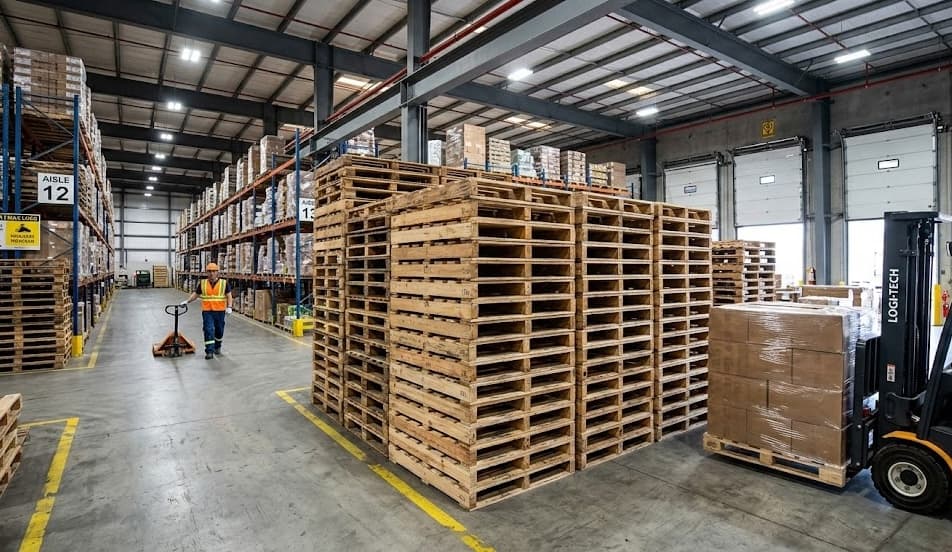
Not all used pallets are equal — and choosing the wrong grade costs money in both directions. Here is a practical guide to matching pallet grade to your actual application needs.
Why Grading Exists
Used pallets span an enormous quality range, from near-factory-new to barely holding together. Grading systems categorize this range so buyers know what they are getting. The challenge is that there is no single national grading standard — different suppliers define grades differently. That makes understanding your supplier's specific criteria essential before placing any order.
Grade A: Premium Used
Grade A pallets are the highest quality tier in the used market. At our facility, Grade A means: no broken or missing boards, no split blocks, all deck boards present and flush, no boards with more than 3/8-inch deflection, and no more than three cosmetic surface marks. These pallets often look nearly new. They are ideal for retail-facing shipments, racked storage, automated systems, and any application where consistent dimensions matter. Typical price: $6 to $10 per unit for standard 48x40.
Grade B: Standard Used
Grade B is the workhorse of the used pallet market. These pallets may have up to two repaired or replaced boards, minor notch repairs, and visible wear or discoloration. They are structurally sound for normal 2,500-pound floor loads. Grade B is the right choice for general warehousing, floor stacking, one-way domestic shipments, and applications where cosmetic appearance does not matter. Typical price: $4 to $7 per unit.
Grade C: Economy
Grade C pallets have multiple repairs, may have significant cosmetic damage, and are suitable for light loads or single-use applications. They work well as dunnage, blocking material, or for low-requirement outbound shipments where the pallet will not be returned. Grade C is also commonly used by businesses that need to protect floors or products during storage but do not need full load-bearing capacity. Typical price: $2 to $4 per unit.
Matching Grade to Application
The most expensive mistake is over-specifying: buying Grade A when Grade B would perform identically for your use case. The second most expensive mistake is under-specifying: buying Grade C for racked storage and dealing with product damage or pallet failures. Here is a quick decision framework. Ask yourself: Will this pallet be racked? If yes, Grade A. Will it be floor-stacked only? Grade B works. Is it a single-use outbound shipment? Grade C is fine. Will the end customer see the pallet? Grade A for appearances.
Always Ask for Written Grading Criteria
Before buying from any supplier, request their written grading criteria. A reputable company will provide this without hesitation. Compare it to your requirements and, if possible, inspect a sample before placing a large order. At San Diego Pallet Co., we provide our grading spec sheet with every quote and welcome on-site inspections at our yard.
Need help with your pallet program?
We've been working with pallets for over 12 years. We'll give you honest, practical advice — not a sales pitch. Email us at info@sandiegopallet.com or use the contact form below.
Contact Us