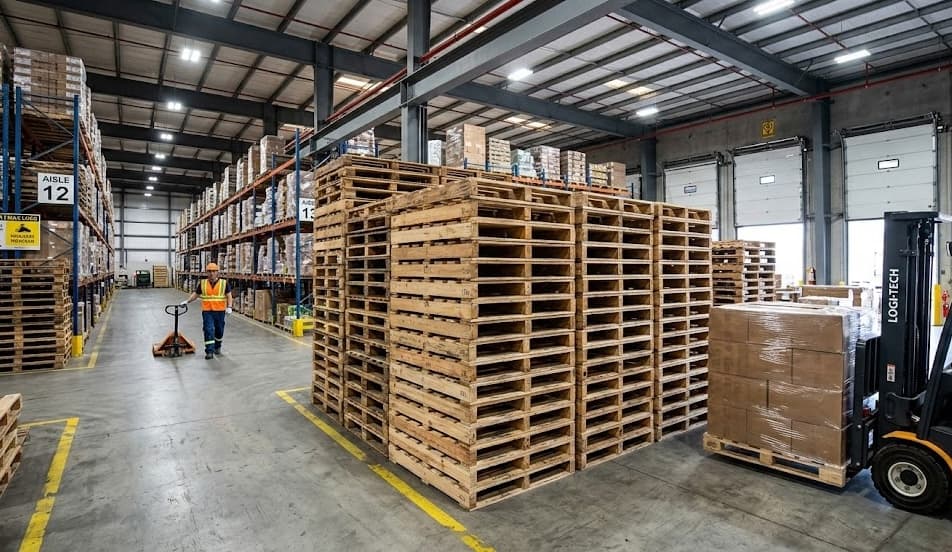
How you store your pallets has a direct impact on how long they last. These eight proven practices can extend pallet lifespan by 50% or more and reduce your annual replacement costs significantly.
Storage Conditions Matter More Than You Think
Most businesses invest time choosing the right pallet grade and supplier, then store their inventory in conditions that accelerate deterioration. Wood pallets are affected by moisture, UV exposure, ground contact, and stacking practices. Getting these factors right does not cost much — but it can cut your pallet replacement rate in half.
Keep Pallets Off the Ground
Direct ground contact is the number one cause of premature pallet rot, especially in outdoor storage. Moisture wicks up from soil or concrete, promoting fungal growth and weakening wood fibers. Store pallets on elevated surfaces — concrete blocks, gravel beds, or purpose-built pallet racks. If ground contact is unavoidable, rotate stock frequently so no pallet sits in one position for more than two weeks.
Control Moisture Exposure
Rain and standing water are obvious threats, but humidity matters too. Indoor storage in a ventilated space is ideal. If outdoor storage is necessary, use tarps or covered structures. Ensure air circulation between stacks — tight packing traps moisture and creates conditions for mold and fungal growth. A simple 4-inch gap between stacks makes a measurable difference.
Stack Height and Stability
Over-stacking is a safety hazard and a pallet killer. We recommend a maximum stack height of 15 pallets for empty standard GMA pallets in good condition. Beyond that, the weight on the bottom pallets causes compression damage to stringers and deck boards. Stack on level surfaces and keep stacks uniform — mixing sizes or grades in the same stack invites collapse.
Rotate Your Stock
First-in, first-out (FIFO) applies to pallets just like it does to inventory. Pallets that sit unused for months in a corner deteriorate faster than those in regular circulation. Mark incoming batches with date stickers and pull from the oldest stock first. This simple practice prevents the common scenario of discovering a stack of unusable pallets that have been sitting forgotten for a year.
Inspect Before Returning to Service
A 15-second visual inspection before loading catches problems early. Check for cracked stringers, loose deck boards, protruding nails, and excessive warping. A pallet with a hairline crack today becomes a collapsed pallet with product damage tomorrow. Train your team to pull compromised pallets from service immediately — the cost of a quick repair is a fraction of the cost of a load failure.
Need help with your pallet program?
We've been working with pallets for over 12 years. We'll give you honest, practical advice — not a sales pitch. Email us at info@sandiegopallet.com or use the contact form below.
Contact Us