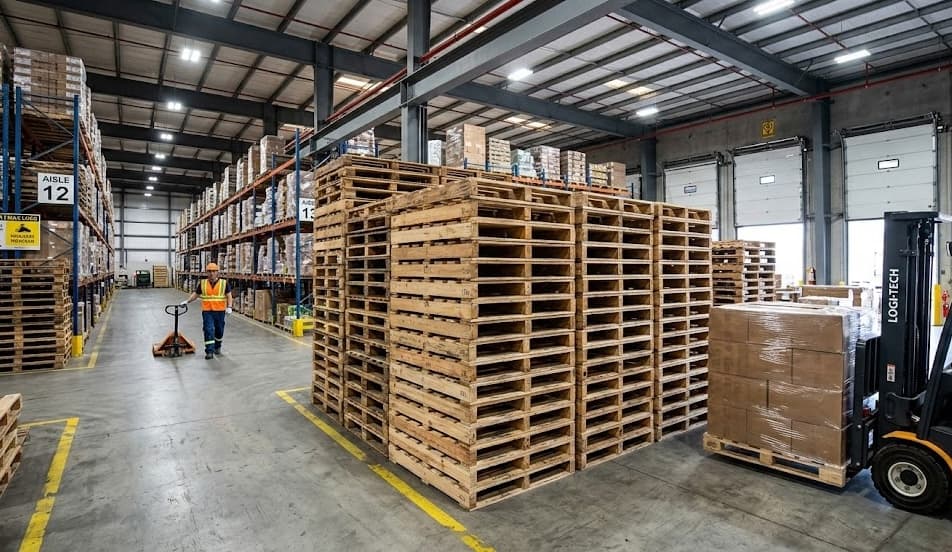
Every pallet that enters our facility is assessed for repair potential before anything else. Here is a behind-the-scenes look at how our repair process works and why it matters for your bottom line.
The Assessment Process
When pallets arrive at our facility — whether from buyback pickups, returns, or wholesale purchases — the first step is always assessment. Each pallet is visually inspected and sorted into one of four categories: ready for resale as-is (Grade A), repairable to Grade A or B standards, repairable to Grade C, or beyond economical repair (sent to recycling). Our grading team processes approximately 300-400 pallets per day through this assessment.
Common Repairs
The most frequent repairs we perform are: deck board replacement (one or two broken top or bottom boards), stringer notch repair (filling or reinforcing damaged notches), block replacement (for block pallets with cracked or missing blocks), nail and fastener replacement (re-securing loose boards), and lead board reattachment (the outermost boards that take the most forklift abuse). A typical board replacement takes 60-90 seconds and costs $1 to $2 in materials.
Quality Control After Repair
Every repaired pallet goes through a second inspection before entering our sales inventory. The inspector checks that all repairs are structurally sound, replacement boards match the original thickness and width, nail patterns meet our standards, and the finished pallet meets the grade criteria it will be sold under. A repaired pallet sold as Grade B has been verified to meet every specification of our Grade B standard — there is no separate 'repaired' category.
The Economics of Repair
Pallet repair is one of the most efficient forms of resource recovery in logistics. The average repair cost is $1.50 to $3.00 per pallet. The repaired pallet has a resale value of $4 to $10 depending on grade. Even accounting for labor and overhead, repair margins are positive — which is why we can afford to pay buyback prices for pallets that other companies would send to the landfill. This economic model drives our zero-waste approach.
What Happens to Pallets Beyond Repair
Approximately 15-20% of pallets we receive are beyond economical repair. These are dismantled rather than discarded. Usable boards are pulled for repair stock. Wood that cannot be reused is chipped and sent to biomass energy facilities or processed into landscape mulch. Metal fasteners are magnetically separated and sent to steel recycling. The end result: zero waste to landfill, even for pallets that cannot be saved as pallets.
Why Repair Matters for Our Customers
Our repair capability is why we can consistently offer competitive pricing on used pallets. By repairing rather than recycling borderline pallets, we maintain a larger inventory of sellable product. This means better availability, more consistent grading, and faster fulfillment on large orders. When you buy a used pallet from us, you benefit from a supply chain that maximizes the value of every piece of wood that enters our yard.
Need help with your pallet program?
We've been working with pallets for over 12 years. We'll give you honest, practical advice — not a sales pitch. Email us at info@sandiegopallet.com or use the contact form below.
Contact Us