Pallet-related injuries are among the most common warehouse incidents. OSHA does not have pallet-specific regulations, but general duty standards apply. Here is what every warehouse manager needs to know.
The Scope of the Problem
The National Institute for Occupational Safety and Health (NIOSH) estimates that pallet-related injuries account for tens of thousands of warehouse incidents annually in the United States. Common injuries include puncture wounds from protruding nails, back strains from improper lifting, foot injuries from dropped pallets, and crush injuries from collapsed pallet stacks. Most of these are preventable with proper procedures and training.
OSHA's General Duty Clause
OSHA does not have regulations specific to pallets. However, the General Duty Clause (Section 5(a)(1) of the OSH Act) requires employers to provide a workplace free from recognized hazards likely to cause death or serious physical harm. Damaged pallets, unsafe stacking practices, and lack of PPE around pallet handling operations all fall under this clause. OSHA inspectors regularly cite general duty violations related to pallet hazards.
Inspection Before Use
Every pallet should be visually inspected before being placed into service. Train your team to check for: broken or cracked deck boards that could fail under load, protruding nails or staples that cause puncture injuries, split or cracked stringers that compromise structural integrity, excessive warping that affects stability, and contamination from chemicals, mold, or biological materials. A 10-second inspection prevents the majority of pallet-related incidents.
Safe Stacking Practices
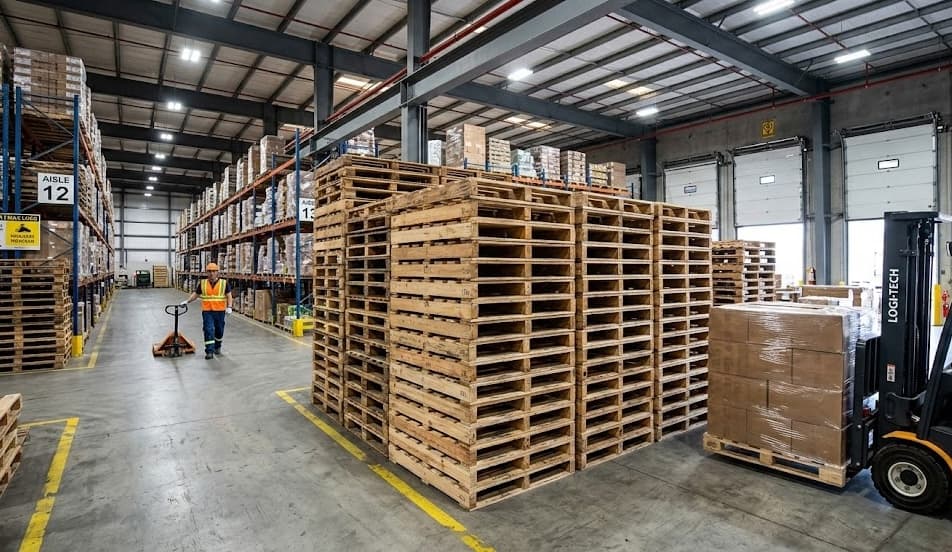
Stack empty pallets no higher than 15 units on a flat, level surface. Never stack different pallet sizes together. Keep stacking areas away from pedestrian walkways. Use mechanical handling equipment (forklifts or pallet jacks) rather than manual lifting whenever possible. When manual handling is necessary, train workers on proper two-person lift techniques for pallets — a standard pallet weighs 40-70 pounds, which is enough to cause back injuries with improper lifting.
Personal Protective Equipment
Minimum PPE for pallet handling operations includes: safety-toed footwear (steel or composite), work gloves rated for puncture resistance, and high-visibility vests in areas with forklift traffic. For pallet repair or dismantling operations, add safety glasses and hearing protection. These are low-cost measures that significantly reduce injury rates.
Creating a Pallet Safety Program
A written pallet safety program should include: inspection criteria and rejection procedures, safe stacking height limits, PPE requirements, training schedules for new and existing employees, and incident reporting procedures. Document the program, train your team, and conduct periodic audits. This documentation also protects you in the event of an OSHA inspection — demonstrating a proactive safety program can influence citation outcomes.
Need help with your pallet program?
We've been working with pallets for over 12 years. We'll give you honest, practical advice — not a sales pitch. Email us at info@sandiegopallet.com or use the contact form below.
Contact Us