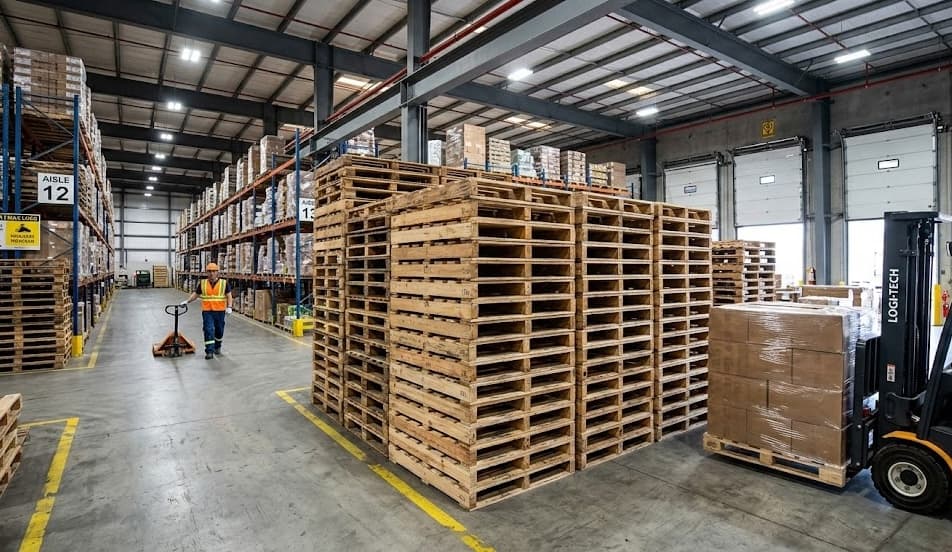
The FDA does not certify pallets directly, but it holds food handlers responsible for the safety of everything that contacts or supports food products. Here is what you actually need to know.
The FDA's Actual Position on Pallets
There is a widespread misconception that the FDA certifies or approves specific pallets as 'food grade.' They do not. What the FDA does is hold food handlers — manufacturers, distributors, and retailers — responsible for ensuring that all surfaces and materials that contact or support food products do not create contamination risks. This means the burden is on you, the food handler, to ensure your pallets are safe for your specific application.
What Makes a Pallet Suitable for Food Applications
For food-contact applications, pallets must be free of chemical contamination (no treatment chemicals beyond ISPM 15 heat treatment), structurally sound with no loose nails or splinters that could contaminate products, free of visible mold, insects, or biological contamination, and clean — no oil stains, chemical residue, or embedded debris. For direct food contact (rare — most food is packaged), plastic pallets are generally preferred because they can be sanitized.
Wood vs. Plastic for Food Applications
The wood versus plastic debate in food applications centers on cleanability. Plastic pallets can be washed and sanitized with standard food-safe cleaning agents. Wood pallets cannot be effectively sanitized due to their porous surface. However, the vast majority of food shipments involve packaged products, where wood pallets are perfectly acceptable because the food never contacts the pallet surface directly. The decision depends on your specific product and packaging.
Can You Use Used Pallets for Food?
Yes, with conditions. Used pallets for food applications must be carefully inspected for contamination. The pallet's history matters — a pallet previously used to ship chemicals should never enter a food supply chain. This is where working with a knowledgeable supplier is critical. We track pallet sources and can provide used pallets from known food-industry supply chains, giving you confidence in their history.
FSMA Compliance Considerations
The Food Safety Modernization Act (FSMA) added requirements around preventive controls and supply chain verification. While FSMA does not specifically regulate pallets, its general requirements for contamination prevention apply. Your food safety plan should address pallet sourcing, inspection, and storage as part of your overall preventive controls. Auditors will ask about it.
Our Recommendation for Food Clients
For general food distribution (packaged products), used Grade A pallets from food-industry supply chains provide the best balance of cost and compliance. For direct food contact or highly sensitive applications, consider new heat-treated pallets or food-grade plastic pallets. In either case, document your pallet sourcing and inspection procedures in your food safety plan. We provide source documentation and inspection certificates for all pallets sold for food applications.
Need help with your pallet program?
We've been working with pallets for over 12 years. We'll give you honest, practical advice — not a sales pitch. Email us at info@sandiegopallet.com or use the contact form below.
Contact Us