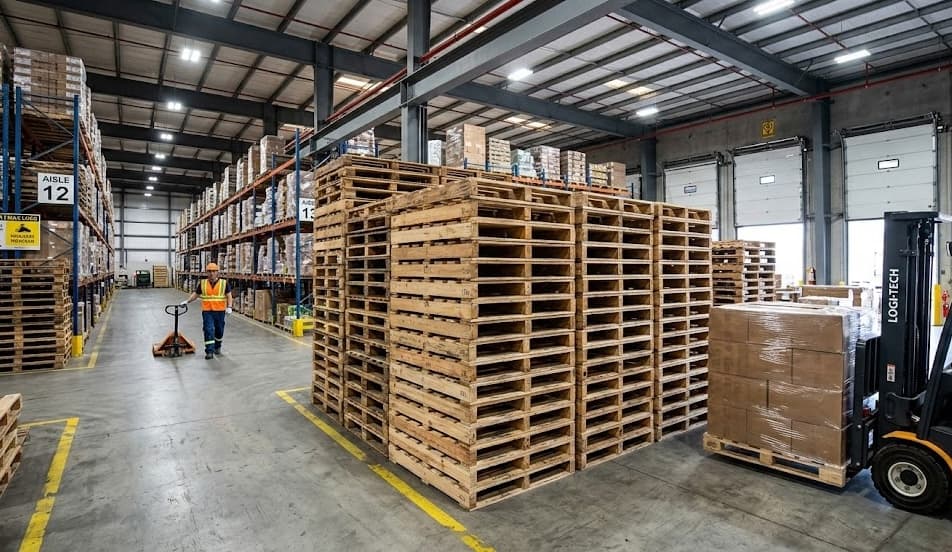
There are over a dozen common pallet sizes in circulation in North America. Understanding which size you actually need — and why — can prevent costly mistakes and improve your logistics efficiency.
The Standard: 48x40 GMA
The 48-inch by 40-inch GMA pallet is the undisputed king of North American logistics. It handles an estimated 30% of all pallets in circulation. Originally standardized by the Grocery Manufacturers Association (now the Consumer Brands Association), it became the default for retailers, grocers, and general warehouse operations. Most racking systems, truck dimensions, and loading dock equipment are designed around this size. If you are unsure what size you need, 48x40 is almost always a safe starting point.
48x48: The Industrial Workhorse
The 48x48 square pallet is the second most common size and dominates in the drum, chemical, and beverage industries. Its square footprint allows four 55-gallon drums to sit perfectly on one pallet. It also fits well in intermodal containers and is popular in paint manufacturing and automotive parts distribution. Used 48x48 pallets are readily available in most markets.
42x42: Telecommunications and Paint
This size is standard in the telecommunications and paint industries, where it evolved to match product dimensions and container loading patterns. Availability is more limited than 48x40 or 48x48, so plan lead times accordingly — especially if you need used pallets in this size.
48x45: Automotive
Common in automotive manufacturing and parts distribution. The extra 5 inches of width compared to a GMA pallet accommodates parts bins and containers used throughout automotive supply chains. This is a common custom order size, but used inventory is increasingly available due to the large volume in circulation.
Euro Pallets: 800x1200mm
If you are importing from or exporting to Europe, you will encounter the EUR pallet (also called EPAL). At roughly 31.5 x 47.2 inches, it is a different footprint entirely from North American standards. EUR pallets are built to different specifications and are not interchangeable with GMA pallets in standard racking systems. If your supply chain bridges both markets, you need a plan for handling both sizes.
Choosing the Right Size
The right pallet size is determined by three factors: your product dimensions (minimize overhang and wasted space), your handling equipment and racking systems (compatibility is non-negotiable), and your shipping method (truck, container, or air freight each have different optimization points). When in doubt, bring your product dimensions and shipping requirements to your pallet supplier. A good supplier will recommend the optimal size based on your actual use case, not just sell you whatever they have the most of.
Need help with your pallet program?
We've been working with pallets for over 12 years. We'll give you honest, practical advice — not a sales pitch. Email us at info@sandiegopallet.com or use the contact form below.
Contact Us